
Almost all infrastructure ministries continued spending on capex throughout the lockdown, even as the Centre tried to maintain some semblance of economic normalcy.

The sudden stop in economic activity led to a sharp decline in employment-intensive sectors like construction, manufacturing and trade, hotels, transport etc.

If the apex court decides on a 15-year repayment tenure, it would pose a grave challenge for the debt ridden VIL.

While Reliance Jio added 3.65 million users in May, both Bharti Airtel and Vodafone Idea continued to lose subscribers.
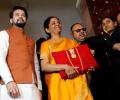
Instead, 2019-20 could be the base from which the Budget estimates for next year are calculated.

he government is examining a plan of bank recapitalisation and considering an urban version of MNREGS.

The plan could mature into either an umbrella programme for urban youths similar to the Garib Kalyan Rozgaar Abhiyaan or a modified urban-focused version of MGNREGS.

The proposal may provide relief to the tune of Rs 9,000 crore to service providers.

Iran's growing proximity to China may have also played a part.

Monetising real estate assets is part of the overall relief package that would be used to retire debts, upgrade networks, and offer VRS aimed at reducing the telcos' employee strength by half.
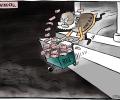
The thinking at the Centre is that since the RBI has ramped up purchases of government bonds, the interest earned on them will be transferred to the exchequer as dividend.

'We are not able to manufacture even low-end products as cheaply as China.' 'We are not buying Chinese goods today out of any love for China.'

The trade deal, officials say, can lead to an effective trading bloc against the China-led Regional Comprehensive Economic Partnership.

This includes an infrastructure push which may lead to the government spending more than its budgeted capital expenditure for 2020-21. There are also discussions on increasing the scope and quantum of direct cash transfers to the beneficiaries who need it the most.

'Given the 50 per cent or thereabouts increase in borrowing that has been announced, it is a reasonable estimate to say that at this time, an increase of 1.7-1.8 per cent on the 3.5 per cent budgeted fiscal deficit target is being anticipated,' Chief Economic Adviser Krishnamurthy Subramanian said on Friday.

'It is a package for a new self-reliant India.'

This comes at a time when the COVID-19 crisis is expected to derail the government's revenue maths for 2020-21, hitting the mop-up from sources such as taxes and divestment.

These conditions are implementation of the 'One Nation, One Ration Card' scheme, ease of doing business, power sector reforms, and urban local body reforms.

Later, there may be some tax relief aimed at the middle class and measures to benefit the sectors worst hit by Covid-19 and the resultant nationwide lockdown.

There could be multiple measures announced in quick succession, not only by the finance minister but also other ministers regarding their respective sectors, and by the Reserve Bank of India. The total size of these announcements could rival that of other G-20 nations as a percentage of GDP.
 © 2026 Rediff.com - Advertise with us - Disclaimer - Privacy Policy - Sitemap - Feedback - About us - Terms of use - Grievances